




一、媒介
前面先容了利用CAS实现的非阻塞行列ConcurrentLinkedQueue,下面就来先容下利用独有锁实现的阻塞行列LinkedBlockingQueue的实现
二、 LinkedBlockingQueue类图布局
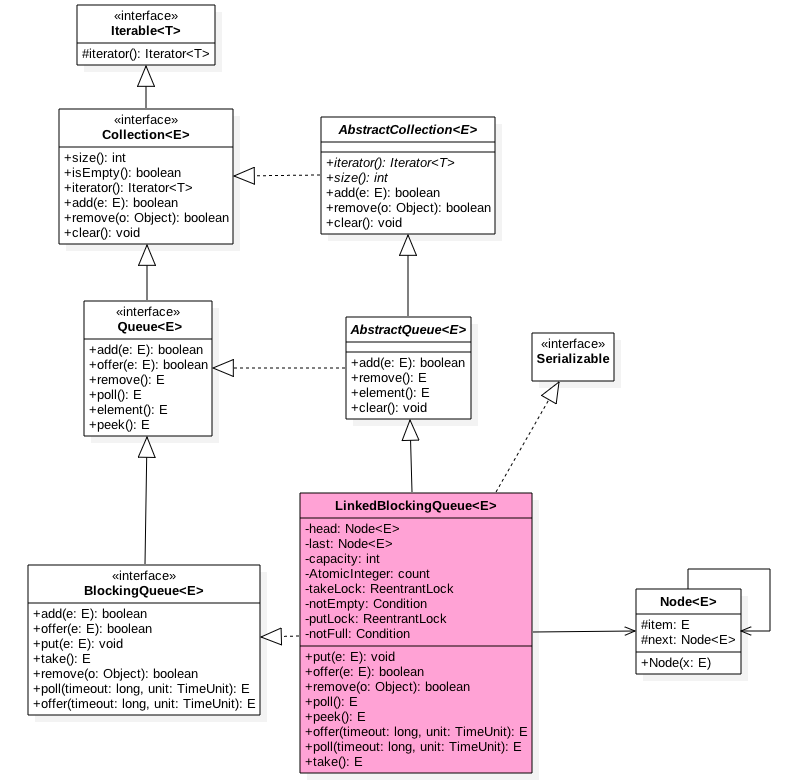
如图LinkedBlockingQueue中也有两个Node别离用来存放首尾节点,而且内里有个初始值为0的原子变量count用来记录行列元素个数,别的内里有两个ReentrantLock的独有锁,别离用来节制元素入队和出队加锁,个中takeLock用来节制同时只有一个线程可以从行列获取元素,其他线程必需期待,putLock节制同时只能有一个线程可以获取锁去添加元素,其他线程必需期待。别的notEmpty和notFull用来实现入队和出队的同步。 别的由于进出队是两个非公正独有锁,所以可以同时又一个线程入队和一个线程出队,其实这个是个出产者-消费者模子。
/** Lock held by take, poll, etc */
private final ReentrantLock takeLock = new ReentrantLock();

/** Wait queue for waiting takes */
private final Condition notEmpty = takeLock.newCondition();

/** Lock held by put, offer, etc */
private final ReentrantLock putLock = new ReentrantLock();

/** Wait queue for waiting puts */
private final Condition notFull = putLock.newCondition();
/* Current number of elements /
private final AtomicInteger count = new AtomicInteger(0);
public static final int   MAX_VALUE = 0x7fffffff;

public LinkedBlockingQueue() {
    this(Integer.MAX_VALUE);
}

  public LinkedBlockingQueue(int capacity) {
    if (capacity <= 0) throw new IllegalArgumentException();
    this.capacity = capacity;
    //初始化首尾节点
    last = head = new Node<E>(null);
}
如图默认行列容量为0x7fffffff;用户也可以本身指定容量。
三、必备基本
3.1 ReentrantLock
可以参考 https://www.atatech.org/articles/80539?flag_data_from=active
3.2 条件变量(Condition)
条件变量这里利用的是takeLock.newCondition()获取也就是说挪用ReentrantLock的要领获取的,那么可预见Condition利用了ReentrantLock的state。上面的参考没有提到所以这里串串讲下
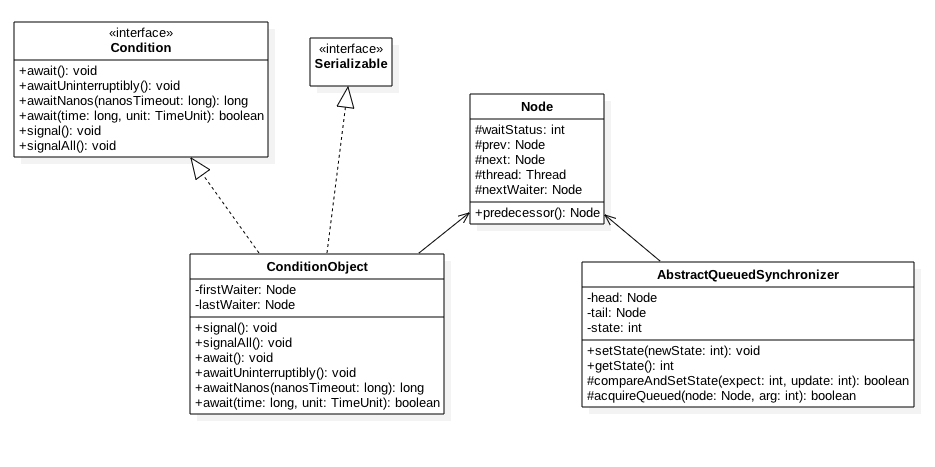
如图ConditionObject中两个node别离用来存放条件行列的首尾节点,条件行列就是挪用条件变量的await要领被阻塞后的节点构成的单向链表。别的ConditionObject还要依赖AQS的state,ConditionObject是AQS类的一个内部类。
public final long awaitNanos(long nanosTimeout)
        throws InterruptedException {

    //假如间断符号被配置了,则抛异常
    if (Thread.interrupted())
        throw new InterruptedException();

    //添加当前线程节点到条件行列,
    Node node = addConditionWaiter();

    //当前线程释放独有锁
    int savedState = fullyRelease(node);
    long lastTime = System.nanoTime();
    int interruptMode = 0;

    while (!isOnSyncQueue(node)) {
        if (nanosTimeout <= 0L) {
            transferAfterCancelledWait(node);
            break;
        }
        //挂起当前线程直到超时
        LockSupport.parkNanos(this, nanosTimeout);
        if ((interruptMode = checkInterruptWhileWaiting(node)) != 0)
            break;

        long now = System.nanoTime();
        nanosTimeout -= now - lastTime;
        lastTime = now;
    }

    //unpark后,当前线程从头获取锁,有大概获取不到被放到AQS的行列
    if (acquireQueued(node, savedState) && interruptMode != THROW_IE)
        interruptMode = REINTERRUPT;
    if (node.nextWaiter != null)
        unlinkCancelledWaiters();
    if (interruptMode != 0)
        reportInterruptAfterWait(interruptMode);
    return nanosTimeout - (System.nanoTime() - lastTime);
}


    final int fullyRelease(Node node) {
        boolean failed = true;
        try {
            int savedState = getState();

            //释放锁,假如失败则抛异常
            if (release(savedState)) {
                failed = false;
                return savedState;
            } else {
                throw new IllegalMonitorStateException();
            }
        } finally {
            if (failed)
                node.waitStatus = Node.CANCELLED;
        }
    }
首先假如当前线程间断符号被配置了,直接抛出异常。添加当前线程节点(状态为:-2)到条件行列。
然后实验释放当前线程拥有的锁并生存当前计数,可知假如当前线程挪用awaitNano前没有利用当前条件变量地址的Reetenlock变量挪用lock可能lockInterruptibly获取到锁,会抛出IllegalMonitorStateException异常。
然后挪用park挂起当前线程直到超时可能其他线程挪用了当前线程的unpark要领,可能挪用了当前线程的interupt要领(这时候会抛异常)。

 联系电话:0512-55008018
 传真:0512-55008018
 邮箱:sales@baoding-soft.com
 地址:昆山市巴城镇学院路828号浦东软件园区1栋4楼A座
 微信交流
微信交流 关注我们
关注我们 首页
首页